
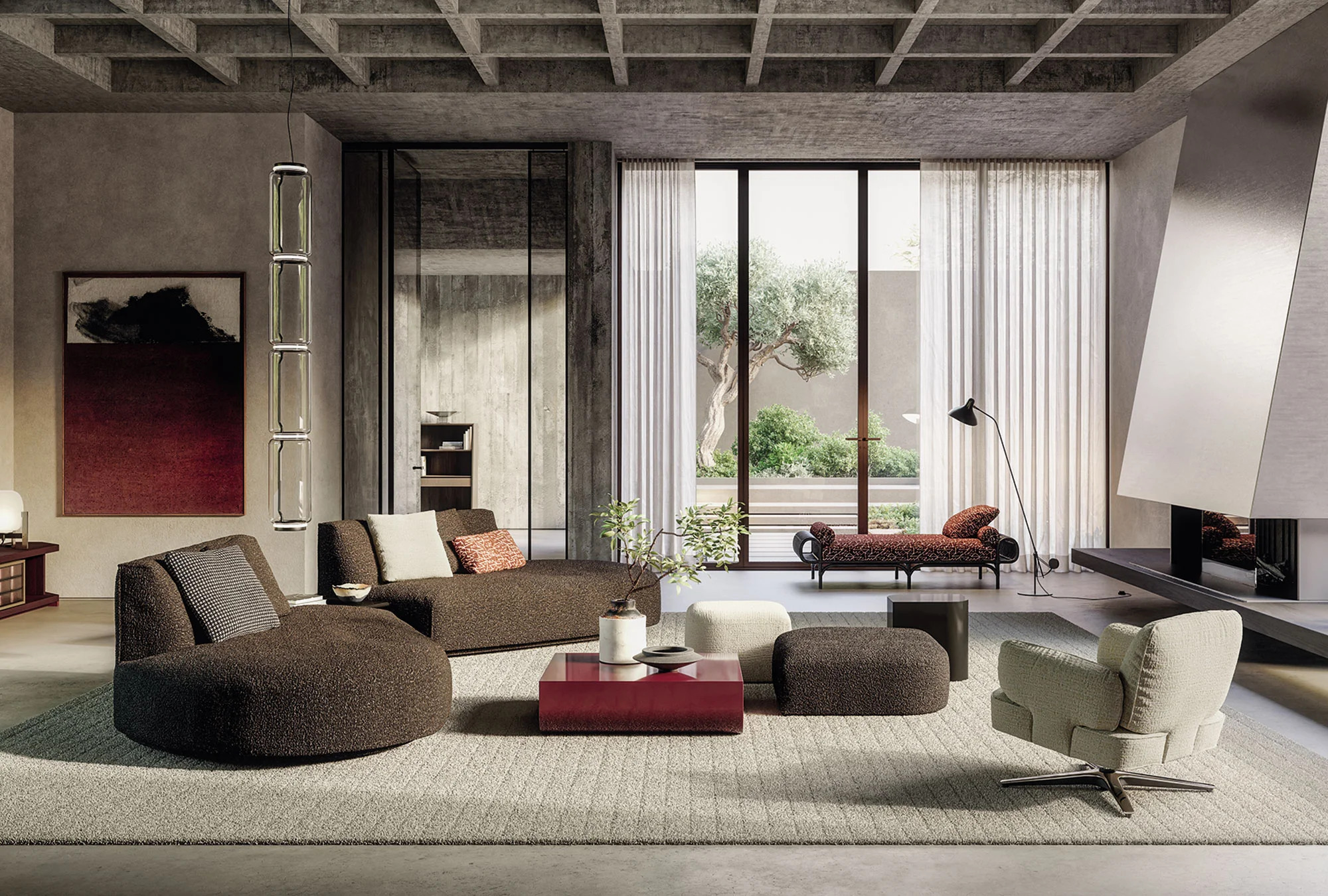
Blog - Interior Design That Doesn’t Date: What to Choose and What to Avoid
Interior Design That Doesn’t Date: What to Choose and What to Avoid
Some renovations still look freshly finished five years on. Others begin to feel dated before the snagging list is even complete. The difference is rarely about budget; it usually comes down to decisions made long before anyone selects a single finish. Interior design that doesn’t date is not about playing it safe or stripping away personality. It is about knowing which elements of your home should be built to last, and which are meant to evolve with you.
Why some interiors look dated within just a few years
The pace at which visual references circulate today has a great deal to do with it. What once took several seasons to settle into a trend now saturates within months, driven by social media and mass-produced furniture. When a renovation leans on that current rather than on sound design principles, the result tends to age at exactly the same rate as the trend that inspired it.
Fleeting trends versus structural decisions
Not every choice carries the same weight or has the same lifespan. A seasonal colour on a cushion can be changed in an afternoon; used across an entire run of kitchen units, that same colour will shape the space for years. Structural decisions — the layout, the relationship between rooms, natural light and the proportions of each space — are what truly carry a project through time. Seasonal finishes, meanwhile, are best treated as an easily replaceable layer.
Low-grade materials that show wear fast
A budget high-gloss lacquer tends to lose its finish after a few years of daily use; an inexpensive synthetic worktop scratches easily, and the mark rarely disappears. Natural stone, well-treated solid wood and hand-finished metals, on the other hand, don’t wear out in the same way — they develop a patina. That distinction between wear and patina is probably the most honest indicator of whether a material was chosen to last or chosen to cut costs.
The most common mistakes that make a home look dated
The first is applying a trend-led colour or texture to a surface that cannot be changed without building work, such as kitchen fronts, flooring or bathroom cladding. The second is over-theming: taking one particular style — industrial, Scandinavian or boho — to its logical extreme in every detail, which ties the whole space to a single moment in interior design history.
The third concerns light. Fixed lighting with no scenes or dimming prevents a room from adapting to different uses and, over the years, makes it feel rigid; lighting control systems such as Lutron exist precisely so that the same room can be bright at midday and intimate in the evening. The fourth, and an increasingly common one, is installing closed, consumer-grade home technology that becomes obsolete long before the renovation itself.
What to choose instead: the principles of interior design that doesn’t date
A timeless architectural foundation
Every interior that ages well starts with a solid architectural foundation: a layout that works regardless of passing trends, good natural light, well-considered proportions and quality materials on every fixed element. This is the phase where a well-planned comprehensive home renovation makes the difference. It isn’t only about renewing finishes, but about rethinking the space from its internal logic so that it still makes sense in ten or twenty years’ time.

Bringing in trends without shortening the design’s lifespan
None of this means giving up on what you love today. It means introducing it through elements that can be replaced without any building work: textiles, statement lighting pieces, decorative objects, art. That changeable layer is what keeps your home feeling current without putting the investment in its structure at risk — and it is, in practice, the simplest route to a renovation that won’t date even as it evolves. We explore the tension between the timeless and the passing from a more aesthetic angle in our article on timeless vs. trendy.

The role of materials and furniture brands
Choosing the right suppliers matters as much as choosing a style. Armony Cucine approaches its kitchens with wellbeing and permanence in mind, and that priority translates into concrete decisions: a careful selection of materials, finishes that age with dignity, and a design language that doesn’t depend on a seasonal whim. The same applies to furniture: working with contemporary furniture brands such as Frigerio, which share that way of thinking, is an additional safeguard against premature wear.

The same logic applies to lighting. Pieces such as the Tizio (Richard Sapper / Artemide) or the Atollo (Vico Magistretti / Oluce) have stayed in production for decades for one simple reason: their design answers a formal and functional problem rather than a passing trend. Bringing references like these into an interior design project is a direct way of protecting the investment against the passage of time.

Home automation: stopping your house ageing from the inside out
Home technology carries its own risk of obsolescence, and it’s usually the one that receives the least forward planning. A closed system tied to a single consumer electronics brand can feel outdated within a few years. An established open standard such as KNX — which we specify with manufacturers such as Gira — or a professional system such as My Home Bticino is built to scale and to integrate new devices without ripping out the entire installation. If you’d like to understand why this decision belongs at the very start of a project rather than as a last-minute addition, our article on smart homes and interior design covers it in more detail.
Frequently asked questions
What does it mean for interior design to age well?
It means that, years later, the space still functions and still feels coherent without requiring a full renovation. This depends on three things: the quality of the fixed materials, a well-resolved layout, and having reserved trends for elements that are easy to refresh, such as textiles, statement lighting or decorative pieces.
Should I avoid trends altogether when renovating a home?
Not necessarily, and it wouldn’t be realistic either. What matters is where they’re placed. On fixed surfaces that are costly to change, such as flooring or kitchen fronts, a trend shortens the design’s lifespan. On movable, replaceable elements, it keeps the home feeling current without putting the structural investment at risk.
Which materials age best in a home?
Natural stone, well-treated solid wood and hand-finished metals age with a patina rather than deteriorating. High-grade lacquers, for their part, withstand daily use better and can be repaired or re-lacquered. Their upfront cost is usually higher, but it is offset by many years of use without replacement.
Can home automation become outdated too?
Yes, particularly when it relies on closed, consumer-grade devices tied to a single brand. Professional systems and open standards such as KNX are designed to expand and integrate new technology without redoing the installation, which is why they are best defined at design stage, before walls and ceilings are closed up.
How long can good interior design last before it needs renovating?
There is no universal figure, as it depends on use and maintenance. But a project built on a solid architectural foundation and quality materials can stay relevant for many years — often well over a decade — with only occasional updates to textiles, lighting or small decorative elements.
A home designed for the decade ahead
If you’re weighing up a renovation and worry the result won’t hold up over the years, that’s exactly the kind of conversation we enjoy having from the very first meeting. At ETNA STUDIO, we approach every project by thinking about how you’ll be living in your home a decade from now, not only how it will look on handover day. If you’d like to tell us about your project, you can reach us through our contact page and we’ll talk it through at your own pace.
Comments
Just Say Your Opinion